


Endangered Languages Signify Endangered Education
- Kady Hammer
- Mar 27, 2017
- 4 min read
In 1948, the United Nations created and ratified the Universal Declaration of Human Rights (UDHR), modeled in part after the U.S. Bill of Rights, but also inspired by the world’s strong commitment and desire to protest the rights of all human beings and prevent future atrocities, such as those committed during World War II. While the UDHR was signed prior to the wave of independence and decolonization, the UDHR and its principles have become jus cogens, and have subsequently become legally binding through reaffirmation in several treaties including: International Covenant on Civil and Political Rights and International Covenant on Economic, Social and Cultural Rights.
Of the many rights protected in the UDHR, the following are the most relevant rights to the following story.

Article 2: “…the rights and freedoms set forth in this Declaration, without distinction of any kind, such as race, colour, sex, language, religion, political or other opinion, national or social origin, property, birth or other status…political, jurisdictional or international status of the country or territory to which a person belongs...”
Article 26: “…the right to education. Education shall be free, at least in the elementary and fundamental stages. Elementary education shall be compulsory…”
Article 27: “…the right freely to participate in the cultural life of the community, to enjoy the arts and to share in scientific advancement and its benefits…
A basic right often forgotten or taken for granted is education. To expand, the United Nations passed several legal instruments relating to inter-cultural, multilingual, and human-rights perspectives in education. Some of these instruments include:
The Declaration on the Rights of Persons Belonging to National or Ethnic, Religious and Linguistic Minorities;
The United Nations Declaration on the Rights of Indigenous Peoples;
The Recommendation on the Status of Teachers; and
The Universal Declaration on Cultural Diversity
During our research in Peru, we stumbled upon many amazing individuals doing incredible work outside the scope of our study. This brings me to Patricia a Texan woman who teaches indigenous community members how to read and write in their own languages. As Patricia informed us, it is common that indigenous people in Peru cannot read or write in their own native languages, let alone read, write or speak in Spanish. Patricia explained her work as we toured through an outdoor classroom shaded by a tin roof awning, passing students ranging from adolescents to adults working together on illustration-style grammar and alphabet workbooks.
There are 47 native languages in Peru. Although Peru’s official languages are only Spanish, Quechua, and Aymara, Spanish is the only language used in school. Many of Patricia’s students cannot attend schools in Peru because they cannot understand Spanish and have difficulty learning Spanish through translation because they cannot read or write in their own language. UNICEF highlighted Peru’s “Spanish-only” schools, which taught students in Spanish despite their ability to understand the language. Patricia continued telling us about her years of experience working with indigenous communities members and how teaching them to read and write in their native tongues not only helped people on an individual level, but also helped the communities as a whole.
To give the context, only 13% of Peruvians speak Quechua. The Quechua-speaking population resides in the Andean mountains, generally in extreme poverty and in fear of discrimination from speaking their native tongue. UNESCO identified the language as vulnerable and endangered. The method of “Spanish-only” schools creates a cycle of illiteracy, feeding into a cycle of poverty where generation after generation of non-Spanish speakers face the difficult challenge of breaking the cycle. Unfortunately the history of Peruvian education policy has perpetuated this system, but there is a glimmer of hope if people like Patricia continue their work and if programs such as Intercultural Bilingual Education (IBE) of UNICEF persists.
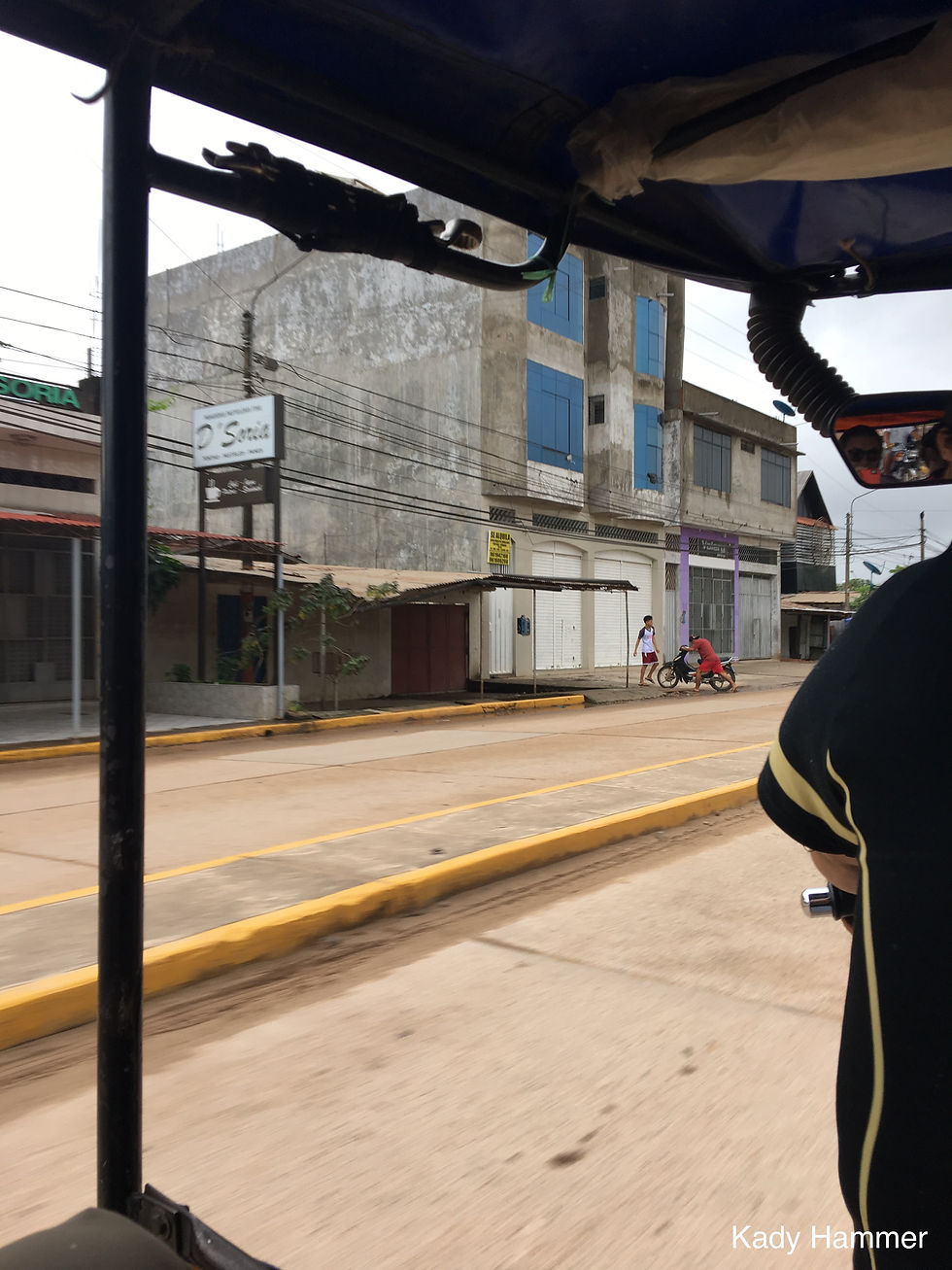
The topic of this year’s International Human Rights Clinic is forest defenders. Many of the issues raised throughout our research are grounded in fundamental human rights issues and, in more instances than we should have an appetite for, involve violations of these rights – either gross or negligible violations. Additionally, questions regarding the entitlement to such rights and in what contexts pervade much of the discussion; however, some of the rights under scrutiny are those categorized as inalienable basic rights.
Many of these new international instruments recognize the connection between education and the reduction of poverty, and furthermore recognize the intersection of culture, language and education. In Peru, this connection was realized much later and corrective policies are just now being implemented. One program underway in Peru is the program mentioned above, IBE, which is working with local institutions and communities to teach children in their native languages and to introduce Spanish secondarily. This program has proven to increase student performance in schools and bring together previously disenfranchised communities.
Through the work of people like Patricia, marginalized communities have the opportunity to access more facets of society. Meeting Patricia and her students was a wonderful break for our research and brought a new dimension to our experience in Peru.


Comments